5 Professional Routines: Tennis Drills That Improve Your Game Faster Than You Think
Most players spend hours rallying without a plan. They feel busy but not better. The difference comes from purposeful tennis drills that repeat a clear pattern and force a decision. When a drill has a goal, your brain learns faster and your body trusts the pattern under pressure. The best routines are short, specific, and easy to measure. They build habits that survive real points, not just warm ups. Short blocks keep the mind sharp and the body fresh, which helps you learn faster.
You do not need fancy gear, only clear targets and honest feedback. In this guide you will get five routines you can run with a partner or a coach. Each one targets a common mistake and replaces it with a reliable response. That is where progress starts.
Why Tennis Drills Beat Random Hitting
Random hitting feels good, but it hides mistakes. A planned routine limits choices and forces you to solve one problem at a time. That is why quick fixes and loose tennis tips rarely stick. Instead, a drill should demand a specific shot, a specific recovery step, and a specific decision. You learn faster because your brain can compare each attempt to the same target. Over a week you start to feel a pattern, not just a stroke. The repetition lowers stress and builds trust in the stroke.
This structure also helps motivation. You know what success looks like and can track it with a simple score, so your practice feels purposeful rather than endless.

The Five Routines and How to Run Them
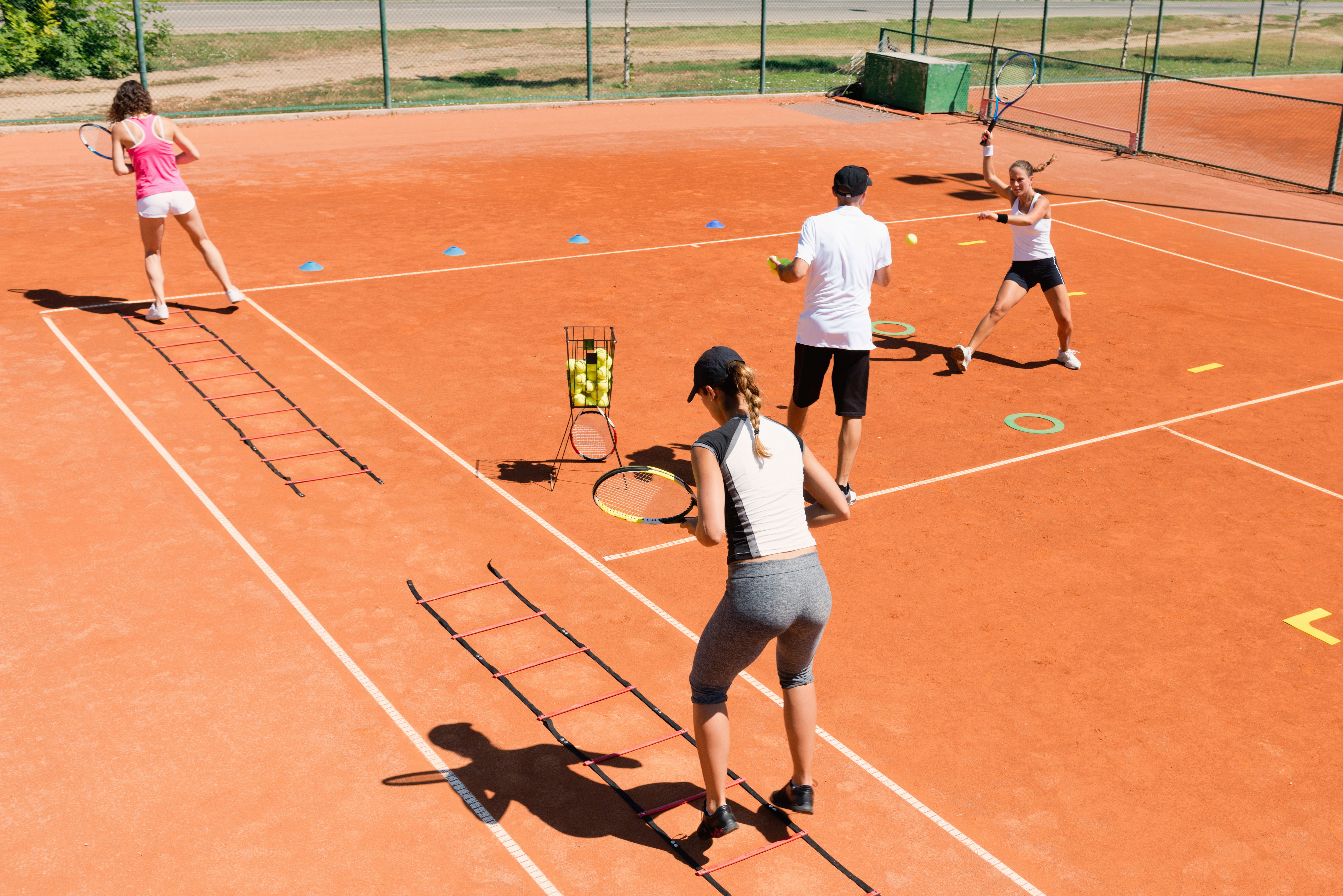
These tennis drills work because they combine repetition with decision making. Use them as a short block inside a normal tennis training session, not as a marathon. Rotate two routines per session so focus stays high and the body stays fresh. Over a week, cover all five and repeat the toughest one twice. A coach can give clear tennis instruction, but the routines also work with a partner who keeps the targets honest. Run each routine for a fixed number of balls and keep a simple score so you can track quality.
- Crosscourt depth ladder to build heavy, safe pace
- Two wide balls then one to the middle for recovery speed
- Approach and first volley to finish points cleanly
- Serve plus first ball to control the next shot
- Defense to offense with one neutral ball then one attack
Finish with a short reset rally so the body cools down with good rhythm.
How to Scale the Work for Different Levels
Scaling matters because not every player has the same control. For tennis for beginners, shorten the court and slow the feed so the pattern stays clean. For intermediate players, add a target zone and a time limit to raise intensity. Advanced players can add a constraint like hitting to a corner after a wide ball. Court surface and ball speed matter too, so adjust targets when conditions change. The goal is the same, but the speed and precision change. Doubles players can add a rule like hitting through the middle to improve safe patterns.
If you lose form, reduce the difficulty instead of grinding through. That keeps the movement clean and prevents bad habits from taking over.
Common Mistakes That Slow Progress
One mistake is practicing too fast for your control, which hides the real issue. Another is changing targets every two minutes, so the pattern never settles. Many players also skip the recovery step, then wonder why their next shot feels late. A simple fix is to decide on one outcome and stay with it for a full block before adjusting. Consistency builds honest feedback, which is the only way to improve.
Another error is keeping the same pace for the entire block. Short resets and a quick breath between reps keep quality high. Also watch your tempo. If you rush between shots, your balance will collapse and the routine will teach bad habits. Slow the feed, land your split step, and reset your feet every time. Progress comes from clean repetitions, not from chaos. A steady rhythm is more valuable than flashy shots. Stay calm and keep the ball count honest.
How to Track Improvement Over Four Weeks
Tracking does not need to be complex. Pick one metric for each routine, such as how many balls land past the service line or how many first volleys stay in play. Keep a short log after each session and note what felt easy or hard. Over four weeks you should see the number rise or the errors drop. If the metric stalls, reduce the difficulty and rebuild clean reps. Keep the log short so you actually use it.
Video from a phone once per week is enough to see progress. Compare early clips to recent ones and look for smoother footwork and calmer timing. Write one note about the cue that helped most. Small changes are the real wins. Sharing the clips with a partner can help you stay honest.

When to Use a Coach or Partner
A reliable partner helps, but a skilled tennis coach sees details you miss. A tennis pro can spot timing issues, rebuild your rhythm, and add small variations once the pattern is stable. That is also when tennis drills can move from practice to match skill, because feedback makes the drills reflect real pressure. If you train alone, film a short segment and compare it to the targets. A partner who calls the score can also add pressure without changing the drill.
Even one coached session per week can keep your work honest and your progress steady.
Conclusion
Short, focused practice beats long, random hitting. The routines above are simple, but the effect is strong when you repeat them with intent. If you commit to these tennis drills for a few weeks, you will feel clearer footwork, cleaner contact, and better decisions under pressure. Track your reps, adjust the difficulty, and keep one goal per session. Progress is about patience, not perfection. Give yourself at least four weeks to feel the full change. Want a custom plan for your level? Reach out and set up a session.
FAQ
How often should I practice these routines each week?
Two to three sessions per week is enough for most players. Keep each block short and focused. Consistency matters more than volume. A simple routine on a steady schedule beats long bursts. Pick a time you can repeat each week. This helps you stay consistent under a busy schedule. If you miss a week, restart gently. Consistency returns quickly when you resume.
Can I run these routines alone?
Some parts can be done with targets, but a partner adds realism. If you are solo, use cones and film a few minutes to check timing. Even a wall session can help if the targets are clear. Keep the feeds calm so the pattern stays clean.
How long should each routine last?
Ten to fifteen minutes per routine works well. Stop when quality drops. It is better to end early than to rehearse errors. Leave a little energy for the next routine.